The strain isn’t only about total demand, though, it’s about timing and infrastructure age. Much of the grid that AI workloads now depend on was built decades before anyone imagined a hyperscale facility, and that mismatch is reshaping how data centers plan for power, redundancy, and testing. Here’s what’s actually driving the strain, and what it means for electrical reliability.
What’s Actually Driving AI’s Power Demand
Training and running large AI models pulls far more power per rack than the IT loads most data centers were originally designed around. A traditional enterprise server rack might draw 5–10 kilowatts; a modern AI training cluster can draw 10 to 20 times that in the same footprint, because GPUs used for AI workloads are simply denser and hungrier than general-purpose compute. Multiply that density across a hyperscale campus, and a single facility’s power requirement can rival that of a small city.
It isn’t just training, either. Every time an AI model responds to a query, a process called inference, it consumes power too, and inference volume scales directly with usage. As AI adoption grows across every industry Grid Solutions serves, from manufacturing to government, the compute (and power) behind it grows with it. That’s the core reason data center electricity demand is climbing faster than most long-range utility forecasts assumed even two or three years ago.
A Grid Built for a Different Era
Here’s the part that turns rising demand into an operational risk: the grid absorbing this load wasn’t built for it. Roughly 70% of the U.S. power grid was constructed between the 1950s and 1970s and is now approaching the end of its designed service life. As one power industry executive put it recently, “unprecedented load growth is exposing the aging nature of our grid.”
For a data center electrical testing program, that’s not an abstract policy problem, it’s the reason interconnection timelines are stretching, why utilities are pushing back on new large-load requests in some regions, and why the margin for error on a facility’s own electrical infrastructure keeps shrinking. When the grid upstream of a facility is running closer to its limits, the facility’s own redundancy has to work exactly as designed, every time, because there’s less slack to absorb a failure.
From Power Consumer to Grid Partner
The response reshaping the industry is a shift from data centers as passive power consumers to active grid partners. Instead of simply drawing more from an already-strained grid, operators are increasingly:
- Co-investing directly in the transmission and substation upgrades needed to serve their own load growth
- Deploying on-site power generation and battery storage to cover peak demand without waiting on new grid capacity
- Participating in load-flexibility programs, shedding or shifting non-critical compute during grid stress events
- Blending renewables, natural gas, and emerging generation technologies into a single, more resilient power strategy
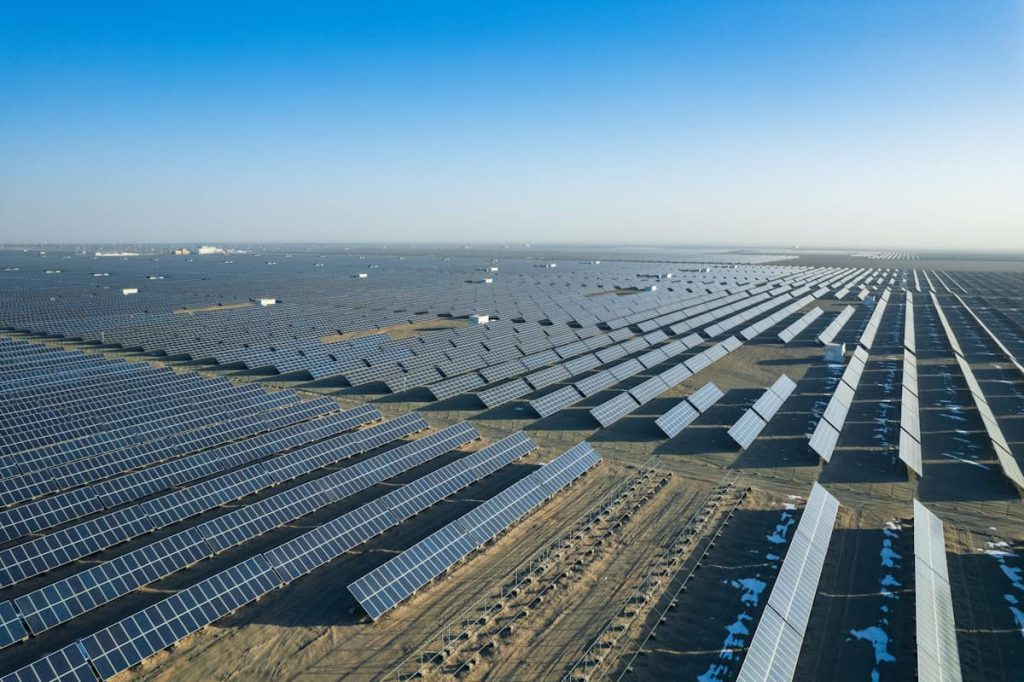
Renewables are a growing piece of that blend. Data centers currently source roughly 27% of their electricity from renewable sources, and renewable generation capacity serving data centers is forecast to grow about 22% annually through 2030, potentially covering close to half of the sector’s anticipated demand growth over that period.
| 2022 (baseline) | 2026 (today) | 2030 (projected) | |
| Data center electricity consumption | ~460 TWh | 1,000+ TWh | Continued sharp growth as AI workloads scale |
| Renewable share of data center power supply | , | ~27% | Trending toward roughly half of new demand growth, at ~22%/year renewable capacity growth |
Figures per Data Center Knowledge’s 2026 power predictions and Schneider Electric’s data center power analysis. 2030 figures are directional industry projections, not guaranteed outcomes.
Why “Tokens Per Watt” Is Becoming the Metric That Matters
As power becomes the binding constraint on AI infrastructure, a new efficiency metric has emerged alongside the traditional Power Usage Effectiveness (PUE) score: tokens per watt. It measures how much AI computational output, the “tokens” a model processes to generate text, images, or other results, a facility gets for every watt of power it consumes.
The reason it matters operationally is straightforward: as AI workloads scale, the facilities that get more useful compute out of every watt are the ones best positioned to keep scaling without simply demanding more power from an already-strained grid. It’s also becoming a real financial metric, not just a technical one, tokens per watt is increasingly tracked alongside cost, reflecting a shift in how data centers are evaluated: less like a cost center to be minimized, more like a production facility whose output-per-input needs to be optimized.
The Redundancy Risk Most Operators Aren’t Testing For
Here’s where power demand and electrical reliability intersect directly. As facilities push closer to their power ceiling to keep up with AI load, the backup systems meant to protect uptime, UPS units, backup generators, transfer switches, get called on to do more, with less operating margin, than they were sized for. A UPS system that hasn’t been load-tested recently, or switchgear that hasn’t been inspected on schedule, can look fully redundant on a facility diagram while carrying real risk that only shows up during an actual outage.
That gap is what turns into “stranded power”, capacity a facility believes it has, that isn’t actually there when it’s needed. The difference between a stranded-power failure and reliable uptime almost always comes down to whether the redundancy was tested under real conditions, not just installed and left alone.
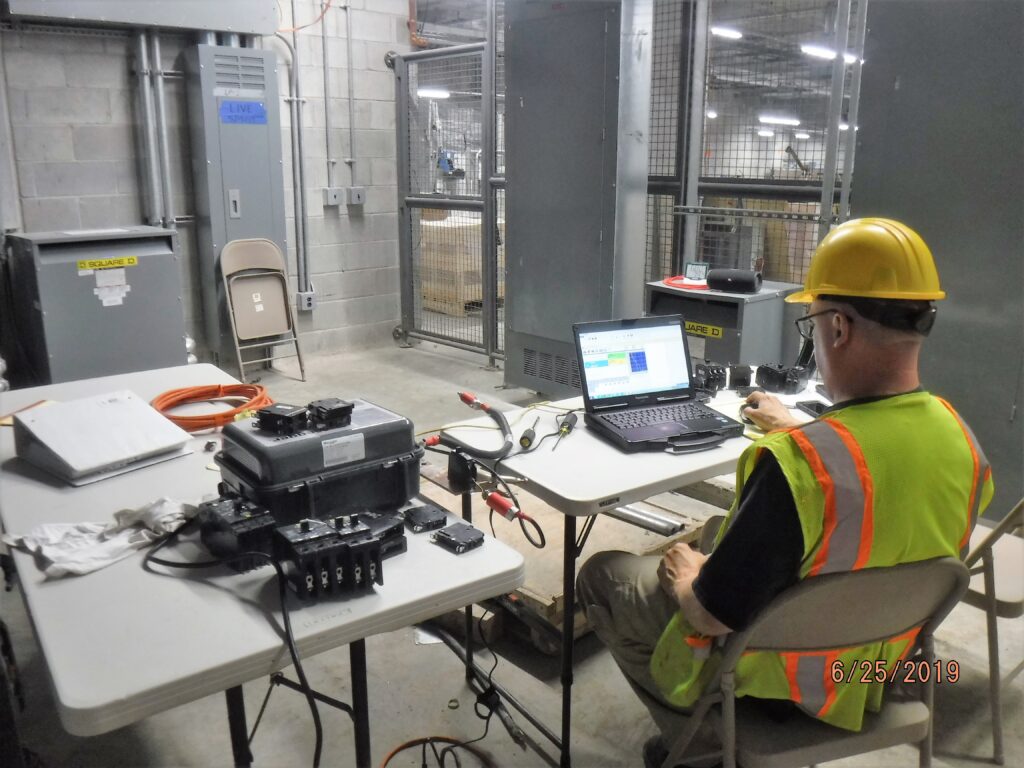
This is exactly the discipline that electrical testing and commissioning programs and ongoing electrical diagnostics software monitoring are built to catch, verifying that backup power, switchgear, and protection systems will actually perform when a facility’s power margin is at its thinnest, not just when it was first commissioned.
What This Means for Data Center Operators
None of this means AI-driven power demand is unmanageable, it means the facilities handling it well are treating electrical reliability as an active, ongoing program rather than a one-time commissioning checkbox. In practice, that looks like more frequent UPS and generator load testing as facilities run closer to capacity, monitoring tools that flag degradation before it becomes downtime, and engineering support for the upgrades needed as power density keeps climbing.
The facilities absorbing AI’s growth most successfully are the ones pairing that testing discipline with the grid-partner strategies above, co-investment, on-site generation, and load flexibility, so that rising demand gets met with real capacity and verified redundancy, not just more connections to an aging grid.
Not sure your facility’s redundancy would hold up under real conditions? Talk to our data center testing team about a reliability assessment.
FAQ’s
Why is AI increasing data center power demand?
AI training and inference workloads run on GPU clusters that draw far more power per rack than traditional enterprise compute. As AI adoption grows across industries, that density is a major reason data center electricity consumption is on pace to more than double between 2022 and 2026.
What does “tokens per watt” mean and why does it matter?
It’s a measure of how much AI computational output a facility produces for every watt of electricity it uses. As power becomes the limiting factor on AI infrastructure growth, tokens per watt is emerging as a key efficiency and financial metric alongside traditional measures like PUE.
How does redundancy testing protect data center uptime?
Regularly load-testing UPS systems, backup generators, and switchgear confirms that a facility’s backup power will actually perform during a real outage, not just that it’s installed and present on a facility diagram.
What happens when data center power infrastructure isn’t tested regularly?
Untested or infrequently tested backup systems create “stranded power” risk: capacity that looks available on paper but fails when it’s actually called on, often during the exact high-demand conditions when a facility can least afford it.
Are data centers becoming active grid partners?
Yes. Rather than only drawing power, a growing number of facilities are co-investing in grid upgrades, deploying on-site generation and battery storage, and participating in load-flexibility programs, shifting from passive consumers to active partners in grid reliability.
Sources cited in this article:
1. Data Center Knowledge, “2026 Predictions: AI Sparks Data Center Power Revolution”
2. Schneider Electric, “The Looming Power Crunch”
3. Schneider Electric, “Why Tokens Per Watt Is Crucial for Measuring AI Efficiency”