If you’re weighing a career change or picking a trade for the first time, the numbers around electrical work in 2026 are worth paying attention to.
The U.S. Bureau of Labor Statistics projects about 81,000 electrician job openings every year for the next decade, and Microsoft’s own president has publicly called the shortage of electricians a real bottleneck on the country’s infrastructure plans. Nearly 30% of today’s union electricians are between 50 and 70 years old, meaning a large share of the workforce is heading toward retirement at the same time demand is climbing. For anyone willing to learn a skilled trade, electrical testing careers in 2026 offer something increasingly rare: clear demand, a defined path in, and real long-term earning potential.
BLS projects roughly 81,000 electrician job openings per year over the next decade, with 9% employment growth, much faster than the average occupation.
Nearly 30% of union electricians are age 50-70, and an estimated 20,000 electricians retire each year, according to Fortune’s reporting.
Estimates from Microsoft and Fortune put the number of new electricians needed over the next decade at 300,000 to 500,000, far more than current apprenticeship pipelines produce annually.
Becoming a certified technician typically takes 4-5 years through a paid apprenticeship, a path that builds toward strong, stable wages without four-year college debt.
The Numbers Behind the Shortage
The scale of the opportunity starts with basic labor statistics. The BLS Occupational Outlook Handbook projects that employment of electricians will grow 9% from 2024 to 2034, much faster than the average for all occupations, with about 81,000 openings projected each year on average over the decade. That figure combines newly created positions with the need to replace workers who retire or leave the trade, and it’s a number the industry has struggled to fill even before demand accelerated further.
That struggle recently became public in an unusually direct way. In a March 2025 op-ed, Microsoft Vice Chair and President Brad Smith wrote that when he asked the company’s infrastructure leaders about the biggest bottleneck to expansion, the answer wasn’t permitting or materials.
“It was people, specifically electricians.”
Smith cited roughly 780,000 active electricians in the U.S. today against around 80,000 open positions, and noted Microsoft has had to fly in or relocate electricians up to 75 miles just to keep projects moving. When a company building some of the largest data centers in the world says its growth is capped by the number of licensed electricians it can find, that’s a signal worth taking seriously if you’re considering the trade.
Why So Many Electricians Are Retiring Right Now
The shortage isn’t only about growth, it’s also about an aging workforce reaching the end of its career at the same time. According to Electrical Contractor Magazine’s reporting on a 2024 Manufacturing Institute and Deloitte study, nearly 30% of union electricians are nearing retirement age. Fortune’s reporting puts a number on what that means in practice: about 20,000 electricians are expected to retire each year, while median age in the trade sits well above 40.
That wave of retirements matters because electrical knowledge doesn’t transfer automatically. Every technician who retires without a trained replacement takes years of field experience, troubleshooting instinct, and site-specific knowledge with them. That’s exactly why apprenticeship pipelines and mentorship programs matter so much right now, not as a nice-to-have, but as the only real mechanism for passing that knowledge forward before it walks out the door.
Why Every Industry Needs More Electrical Talent
If you’ve followed the other trends shaping the electrical industry right now, this shortage is the thread connecting all of them. Data centers racing to keep up with AI demand need electricians to build and maintain the power infrastructure behind every server hall, and Fortune’s reporting notes electrical work accounts for 45% to 70% of total data center construction costs. An aging utility grid needs skilled hands to inspect, test, and replace equipment installed decades ago. Manufacturing reshoring back to the U.S. needs technicians to commission new production lines and the electrical systems behind them. None of those challenges get solved without more people entering the trade. That’s the opportunity: a career in electrical testing and skilled trades work isn’t a bet on one industry, it’s a bet on the infrastructure underneath nearly every industry.
The Workforce Pipeline: Openings vs. the People Coming In
Put the numbers side by side and the gap becomes concrete. This is the pipeline problem the industry is actually trying to solve.
| Metric | Figure | Source |
|---|---|---|
| Active electricians in the U.S. today | ~780,000 | Fox Business (Brad Smith, Microsoft) |
| Average annual electrician job openings (2024–2034) | ~81,000/year | BLS Occupational Outlook Handbook |
| Electricians retiring each year | ~20,000/year | Fortune |
| New electricians needed over the next decade | 300,000 to 500,000+ | Fortune and Fox Business (Microsoft) |
| Commercial apprenticeship applications, 2022 to 2024 | Up more than 70% (roughly 70,000 to 120,000) | Fortune |
The good news buried in this table is the last row: more people are applying to apprenticeships than a few years ago. The pipeline is growing, it’s just starting from a gap wide enough that it will take years of sustained apprenticeship growth to close.
What It Takes to Become a Certified Technician
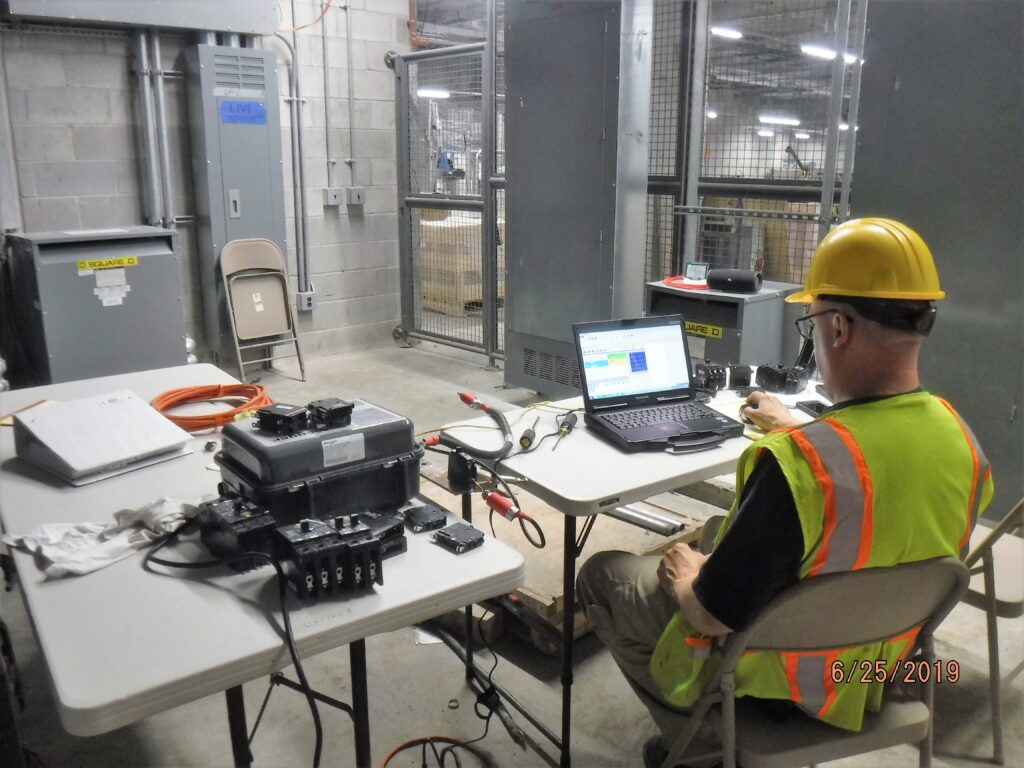
Unlike many in-demand careers, this one doesn’t require a four-year degree or student debt to get started. The typical path runs through a paid apprenticeship, generally 4-5 years, combining on-the-job training under licensed electricians with classroom instruction in electrical theory, code, and safety. From there, a technician can pursue certification through NETA (the InterNational Electrical Testing Association), the credential that verifies a technician is qualified to test and commission the switchgear, transformers, and protection systems that keep facilities running safely. Learn more about what that technical training path looks like on our technical careers page. It’s a steady, structured climb, not a leap, and every step along the way is paid work, not a classroom bill.
What Makes This a Strong Career, Not Just a Job
The earning trajectory is a big part of why this path is worth considering seriously. Fortune’s reporting notes IBEW apprentices often start around $26 an hour and can reach roughly $59.50 an hour, close to $120,000 a year, as fully qualified journeymen. That’s a real, verifiable wage ladder, not a vague promise, and it comes with something a lot of careers don’t offer anymore: work that can’t be automated or outsourced. Testing switchgear, commissioning a substation, or troubleshooting a protection relay requires a human being physically present with hands-on judgment, which is part of why demand keeps climbing even as other fields face automation pressure.
How Grid Solutions Invests in the Next Generation
That’s the environment Grid Solutions built its own training approach around. Every technician who joins works alongside experienced field engineers from day one, learning the same testing and commissioning discipline that’s been passed down through decades of fieldwork, not left to figure it out alone. We support certification directly, because a credentialed, well-mentored technician is both a stronger asset for our clients and a more valuable, more employable professional over the course of their career. Our team culture reflects that investment; you can read more about what that looks like day to day on our culture page.
If that sounds like the kind of trade you want to learn, our current openings are a good place to see what an entry point looks like right now.
FAQ
How big is the electrician shortage in 2026?
Estimates vary by source, but they point the same direction: the BLS projects about 81,000 electrician job openings per year over the next decade, while Fortune and Fox Business (citing Microsoft) estimate the country will need 300,000 to 500,000 new electricians over that period, well beyond what current training pipelines produce.
Why are so many electricians retiring right now?
Nearly 30% of union electricians are between 50 and 70 years old, and roughly 20,000 are expected to retire each year, according to Fortune’s reporting on a wave of retirements hitting the trade at the same time demand from data centers, aging grid infrastructure, and manufacturing is climbing.
How long does it take to become a certified technician?
Most technicians go through a paid apprenticeship of about 4-5 years, combining on-the-job training with classroom instruction, before pursuing NETA certification to test and commission electrical equipment independently.
What makes electrical testing a strong career path?
It combines steady, well-documented demand with a real wage ladder. IBEW apprentices often start around $26 an hour and can reach close to $59.50 an hour, around $120,000 a year, as journeymen, and the hands-on nature of the work means it isn’t easily automated or outsourced.
Does Grid Solutions offer apprenticeships or training support?
Yes. Grid Solutions pairs new technicians with experienced field engineers, supports certification, and invests in mentorship as a core part of how the team develops talent, not an afterthought.
Sources cited in this article:
1. U.S. Bureau of Labor Statistics, “Electricians,” Occupational Outlook Handbook
2. Brad Smith, Fox Business, “The country needs more electricity, and more electricians”