Aging power grid infrastructure is running headfirst into a load profile it was never designed to carry. Most of the transmission and distribution equipment still in service today was built decades before anyone planned for electric vehicle charging, data center campuses, or widespread electrification, and a lot of it is now well past the point where utilities expected to replace it.
At the same time, utility capital spending is climbing at a pace regulators and rate structures weren’t built to absorb quickly. That combination puts real pressure on utilities to decide, in the near term, where dollars actually go. This post looks at how old the grid really is, why spending is surging, and why testing and maintenance, not just new construction, is the lever utilities can pull right now.
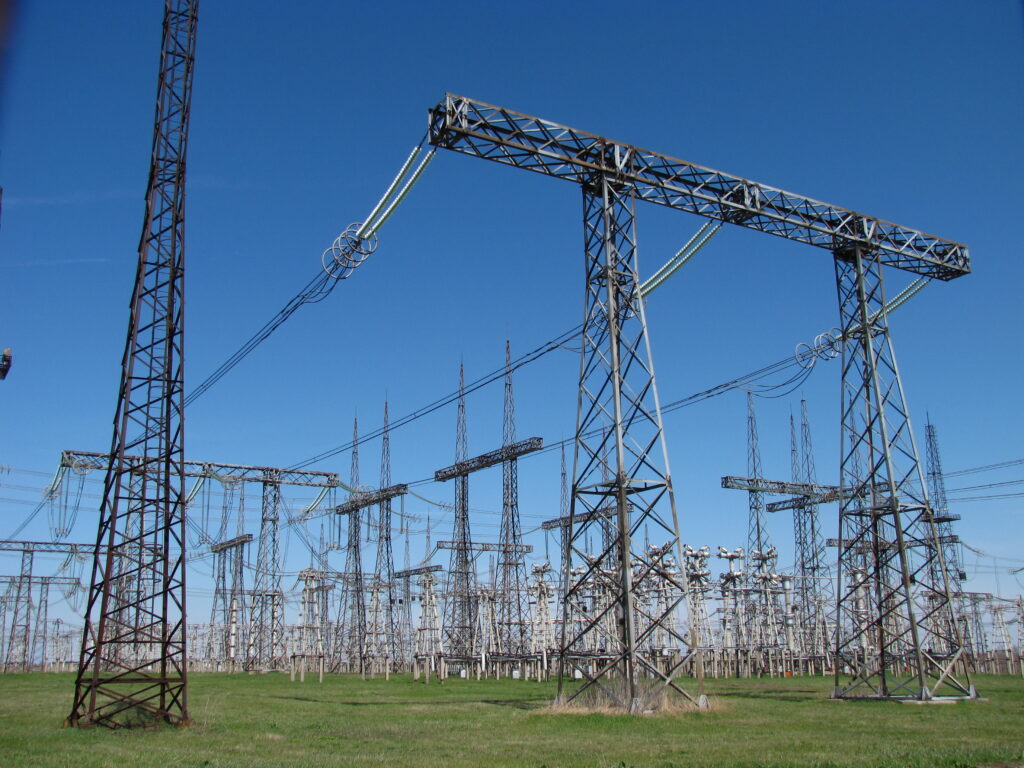
As of 2023, 70% of U.S. transmission lines and transformers were already over 25 years old, and much of that equipment was built in the 1960s and 1970s, approaching the end of its 50 to 80-year design life.
Annual utility capital investment has surpassed $200 billion (up 42% since 2020), with total capex forecast to exceed $1 trillion over the next five years, and some analysts project a “super-cycle” reaching $1.4 trillion through 2030.
Capital spending is rising faster than utilities can recover it through rate cases, creating a cost-recovery gap that limits how fast new construction alone can solve the aging-infrastructure problem.
Testing and maintenance on equipment already in the ground is the tool utilities control in the short term, catching degradation before it becomes an unplanned outage or a compliance finding.
How Old Is the Grid, Really?
The “aging grid” isn’t a talking point, it’s a documented equipment-age problem. According to research from SEPA (the Smart Electric Power Alliance), as of 2023, 70% of the lines and transformers deployed on the U.S. grid were over 25 years old, and much of that infrastructure was originally built in the 1960s and 1970s. That matters because most transmission and distribution equipment has a design life, the number of years an asset is engineered to operate reliably under normal conditions, of roughly 50 to 80 years. A lot of what’s energized today is closing in on that ceiling.
“Most of the grid was built between the 1950s and 1970s, and today, approximately 70% of the grid is approaching the end of its life cycle.”
SEPA’s research also notes that overall grid reliability has been declining since the mid-2010s, and aging infrastructure is a meaningful part of why. None of this means the grid is failing today, it means the margin for deferred maintenance keeps shrinking as equipment ages past the point utilities originally planned for its replacement.
Why Utility Capital Spending Is Surging in 2026
Utilities know the age problem exists, and spending reflects it. According to CoBank Knowledge Exchange, annual utility capital investment has surpassed $200 billion, up 42% since 2020. Distribution spending specifically has nearly doubled over that same period, reaching $104 billion in 2025, and total utility capex is forecast to exceed $1 trillion over the next five years.
That spending isn’t only about replacing old equipment. New transmission for renewables interconnection, substation upgrades to serve data center and industrial load growth, and grid-hardening work against extreme weather are all competing for the same capital and the same supply chains. CoBank also points to a practical bottleneck behind the numbers: equipment lead times, the time between ordering a transformer or breaker and having it delivered, have stretched to 3 to 4 years in many cases. Even utilities with the budget to replace aging assets faster often can’t get the equipment on a faster timeline.
The Cost-Recovery Gap: When Capex Outpaces Rate Cases
Spending more doesn’t automatically mean recovering more. A rate case is the regulatory process by which a utility asks its state commission for permission to raise customer rates to recover the cost of its investments. Historically, capital spending and rate case timing have moved at roughly the same pace. That’s changing.
Morningstar DBRS analysis, reported by Utility Dive, projects utilities may face a capex “super-cycle” totaling as much as $1.4 trillion from 2025 through 2030, roughly double the prior decade’s spending. The analysis warns plainly: “These factors complicate both the timing and certainty of recovery, particularly when capital outlays are rising at a faster cadence than rate cases.” In practice, that means utilities are committing to major spending before they know with certainty how, or how quickly, they’ll recover it. That uncertainty makes every dollar of capital spending carry more scrutiny, which is exactly why the equipment utilities already own, and already control, becomes the more immediate lever.
New Construction vs. the Equipment Already in the Ground
New construction and interconnection projects get the headlines, but they’re not the whole grid-age story. A new substation transformer takes years to permit, fund through a rate case, and finally energize. The transformers, breakers, and protective relays already in service today, many already past 25 years old per SEPA’s data, are operating right now, and their condition is knowable today through testing rather than years from now through replacement.
That’s the practical distinction utilities can act on immediately: capital construction addresses capacity and modernization on a multi-year timeline, while electrical testing and maintenance addresses the condition of equipment already energized, on a timeline measured in months, not years. The table below reflects general industry testing-frequency guidance, drawn from standards bodies like NETA (the InterNational Electrical Testing Association), for how often testing intervals typically tighten as equipment ages.
| Equipment Condition | Typical Testing/Inspection Frequency | Why It Matters |
|---|---|---|
| Newly commissioned (0–10 years) | Baseline test at commissioning, then every 3–5 years | Confirms installation quality and establishes a performance baseline |
| Mid-life (10–25 years) | Every 2–3 years | Insulation breakdown and mechanical wear begin showing measurable, testable degradation |
| Approaching or past design life (25+ years, most of today’s grid, per SEPA) | Annually, or per NETA maintenance testing specification intervals | Failure risk accelerates faster once equipment exceeds its designed service life |
| Critical substation assets (power transformers, breakers, protective relays) | Annually to biennially, regardless of overall grid age | Substations concentrate risk, a single undetected fault can cascade into a multi-customer outage |
Frequency guidance reflects general industry testing standards (e.g. NETA maintenance testing specifications), not a statistic from the sources cited in this article. Grid age figures per SEPA.
Testing and Maintenance: The Lever Utilities Control Right Now
Here’s the practical argument this data points to: utilities can’t accelerate rate cases or shrink equipment lead times on their own, but they can control how rigorously they test and maintain what’s already energized. Deferred testing on aging equipment doesn’t announce itself, a transformer can look fine on a facility diagram right up until it doesn’t, and the equipment most likely to fail unexpectedly is exactly the equipment that’s oldest and most overdue for inspection.
That makes testing and maintenance the one part of grid resilience investment that doesn’t wait on a rate case outcome or a multi-year construction timeline. It’s the difference between finding a failing bushing or a degraded relay during a scheduled test and finding it during an actual outage or, worse, a compliance audit.
Where Aging and Load Growth Collide: Substations
Substations sit at the center of this problem. They’re where aging equipment, rising load from data centers and electrification, and the tightest lead times for replacement parts all converge in one physical location. A substation transformer installed in the 1970s wasn’t sized or tested for today’s load profile, and the breakers and protective relays around it are frequently the same vintage.
That combination is why substation testing and maintenance work has become one of the more urgent categories of utility maintenance backlog to address. Regular substation-level testing, insulation resistance, power factor testing, breaker timing, and protective relay calibration, catches the specific failure modes that aging equipment develops under sustained higher load, before they turn into a regional outage.
Grid modernization and reliability start with knowing exactly what condition your existing infrastructure is in. Explore how Grid Solutions supports utility testing and modernization programs.
FAQ
How old is most of the U.S. power grid?
As of 2023, 70% of U.S. transmission lines and transformers were over 25 years old, and much of the grid was originally built in the 1960s and 1970s, approaching the end of typical 50 to 80-year design lives, according to research from SEPA.
Why is utility capital spending increasing in 2026?
Utilities are funding aging-infrastructure replacement, renewables interconnection, grid hardening, and capacity upgrades for rising load all at once. Annual utility capital investment has surpassed $200 billion, up 42% since 2020, with total capex forecast to exceed $1 trillion over the next five years.
What’s the difference between grid modernization and routine maintenance testing?
Grid modernization refers to capital construction, new substations, transmission lines, and upgraded equipment, typically funded through a multi-year rate case process. Routine maintenance testing evaluates the condition of equipment already in service and can happen on a much shorter timeline, without waiting on new construction or rate approval.
How often should aging substation equipment be tested?
General industry guidance, including NETA maintenance testing specifications, points toward annual testing for substation equipment approaching or past its design life, compared to every 2-3 years for mid-life equipment and every 3-5 years for newly commissioned assets.
What happens if utilities defer testing on aging equipment?
Deferred testing means degradation goes undetected until it causes an unplanned outage or shows up as a finding during a compliance audit. Equipment that’s already past its design life carries a higher, faster-accelerating failure risk, which is exactly the equipment testing programs are designed to catch early.
Sources cited in this article:
1. SEPA, “The Aging US Power Grid: Navigating Toward Modernization”
2. CoBank Knowledge Exchange, “Surge in grid spending tests utility supply chains”
3. Utility Dive, “Utilities face cost-recovery risk as infrastructure costs, demand rise: Morningstar”
4. Data Center Knowledge, “2026 Predictions: AI Sparks Data Center Power Revolution”