Most commercial building electrical risk doesn’t look like a spark or a tripped breaker. It looks like nothing at all, right up until it doesn’t.
Aging switchgear, deferred maintenance, and overloaded panels tend to sit quietly behind a wall or in a basement electrical room for years, giving no visible sign of trouble until they cause a tenant-facing outage, trigger an insurance claim, or become a liability issue tied directly back to the building owner. For office, retail, and multi-tenant residential properties, that invisibility is exactly what makes routine electrical testing a property-value decision, not just a compliance checkbox. Here’s what’s actually driving the risk, and how a well-scheduled testing program protects the asset without disrupting the tenants who occupy it.
Electrical malfunction caused an estimated 7,400 nonresidential building fires in 2023 alone, with $354.4 million in direct property damage.
“Stores and offices” account for a disproportionate share of nonresidential fire losses, 36% of dollar losses from just 17% of fire incidents.
Most electrical equipment failures trace back to preventable, maintenance-related causes: overload, loose connections, poor ventilation, and contamination.
Routine testing can be scheduled around tenant operations, meaning risk reduction doesn’t have to come at the cost of building uptime.
Why Aging Commercial Electrical Systems Are a Quiet Risk
Electrical systems in commercial buildings don’t fail on a predictable schedule. They degrade gradually, through heat cycling, corrosion, loosening connections, and components running past the conditions they were rated for, until a failure point is reached that’s often invisible from the outside. A breaker panel or a run of switchgear can look completely normal on a walkthrough while carrying real, developing risk underneath its enclosure.
That gradual degradation is exactly what national fire data captures. In 2023, an estimated 7,400 nonresidential building fires were caused by electrical malfunction, resulting in $354.4 million in direct property damage, according to the U.S. Fire Administration. Over the 2014-2023 period, fire counts actually fell by about 7%, but inflation-adjusted dollar losses stayed roughly flat, meaning that when an electrical fire does happen in a commercial building, it isn’t getting any less severe. Fewer incidents, same-size losses, is a pattern consistent with systems that are aging in place faster than they’re being tested and maintained.
The Property Types Carrying the Most Risk
Not all commercial property types carry electrical risk equally. According to the USFA’s Topical Fire Report Series, “stores and offices” made up 17% of nonresidential building fires between 2017 and 2019, but a disproportionate 36% of dollar losses and 22% of injuries. That gap between share of incidents and share of damage suggests these property types are exposed to worse outcomes when electrical failures do occur, likely tied to occupancy density, tenant electrical load variability, and the age of infrastructure common in office and retail buildings.
Electrical malfunction accounted for 8% of all nonresidential fires overall, but 14% of “nonconfined” fires, the more serious incidents that spread beyond their point of origin rather than staying contained. That distinction matters for property managers: electrical fires are disproportionately represented among the fires that actually escalate, not the ones caught early and put out at the source.
What’s Actually Causing These Failures
The mechanism behind most of these losses is well understood, and largely preventable.
“The majority of losses involving electrical equipment are related to poor operating conditions (e.g., overload, loose connections) or environment (e.g., poor ventilation, corrosion, contamination, combustible storage).”
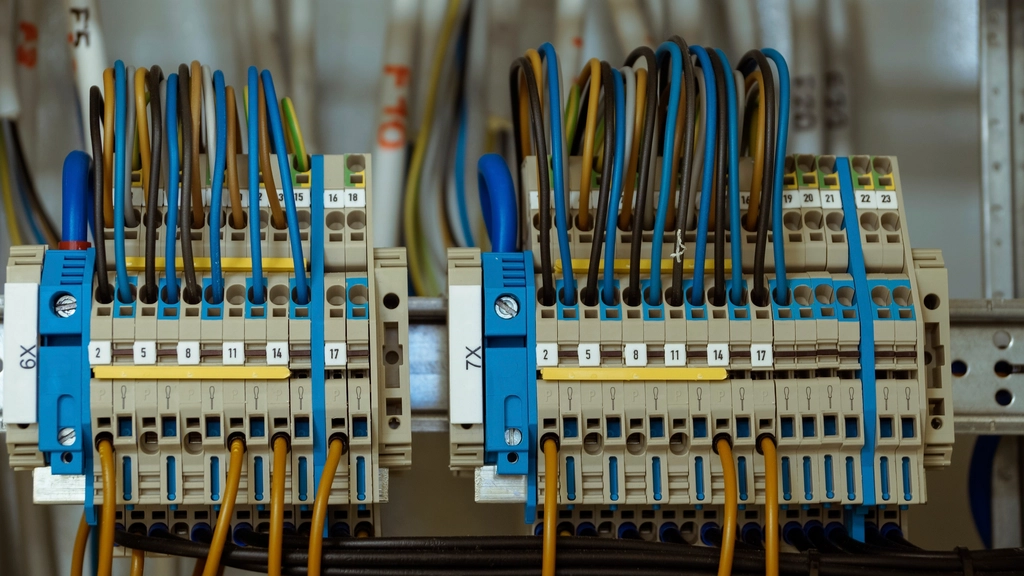
These aren’t manufacturing defects or freak accidents, they’re conditions that develop over time and that testing is specifically designed to catch. Heat is the clearest warning sign, and the physics behind it are unforgiving: FM Global notes that for every 18 degrees Fahrenheit a component runs above its rated operating temperature, insulation life is roughly cut in half. A loose connection or an overloaded circuit that’s running hot today isn’t just a minor inefficiency, it’s actively shortening the service life of the equipment around it, compounding the risk with every month it goes unaddressed. Travelers Risk Control names this same equipment (wiring, load centers, junction boxes, circuit breakers, transformers, motors) as fire hazards specifically when improperly installed or maintained, and recommends infrared scanning as a way to catch overheating components before they cause downtime, production losses, or fires.
How Often Commercial Properties Actually Need Testing
Testing frequency isn’t one-size-fits-all, it depends on the equipment and the property’s operating profile. FM Global’s Data Sheet 5-20 lays out a practical baseline that applies well across office, retail, and multi-tenant residential portfolios:
| Property Type / Equipment | Recommended Testing Frequency |
|---|---|
| All electrical equipment (general) | Annual infrared survey |
| Low-voltage switchgear and breakers | Every 3–5 years |
| Transfer switches | Every 3–5 years |
| Dry-type transformers | Every 3–5 years |
| Fluid-filled transformer oil | Every 1–2 years |
| Office buildings (higher tenant density, IT/HVAC load) | Annual infrared, 3-year switchgear cycle recommended |
| Retail properties (variable seasonal load, frequent tenant buildout) | Annual infrared, inspection at major tenant turnover |
| Multi-tenant residential (aging risers, shared panels) | Annual infrared, 3–5 year switchgear/panel cycle |
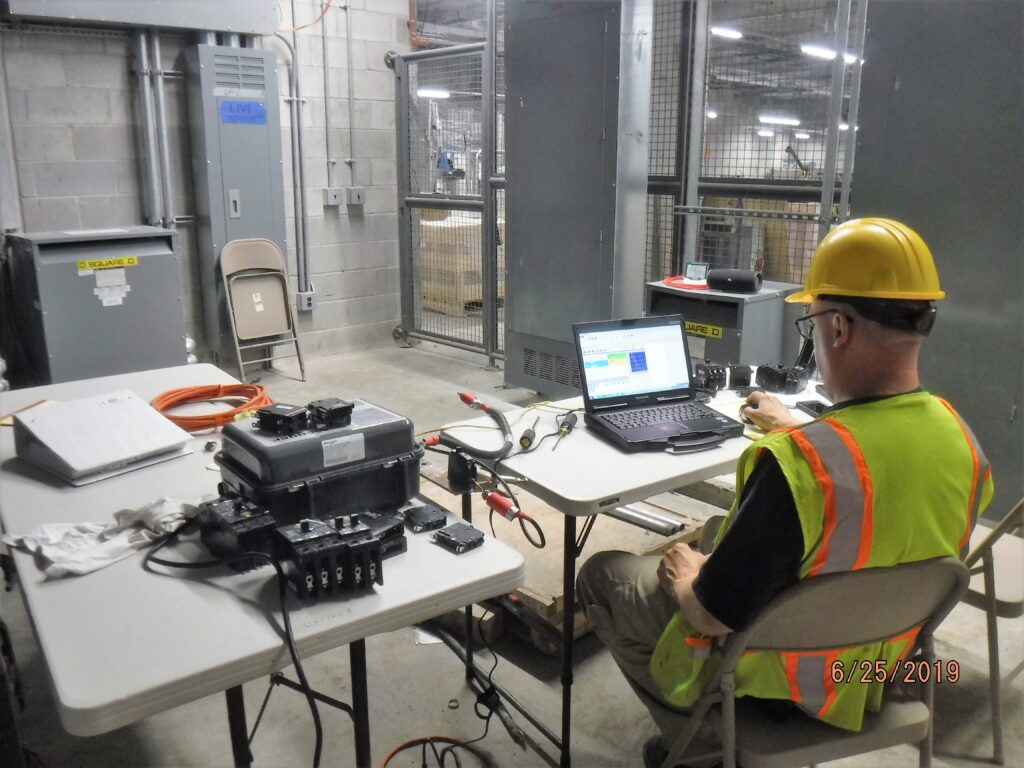
The common thread across all three property types is the annual infrared survey. It’s the lowest-disruption, highest-value tool for catching a developing problem, a hot connection, an overloaded breaker, before it becomes a failure, and it can typically be performed without shutting anything down.
Deferred Maintenance Doesn’t Just Risk a Fire, It Risks the Asset
The consequences of deferred electrical maintenance extend well past the immediate risk of a fire or an outage. A structure fire is reported roughly every minute of every day in the United States, resulting in approximately $12 billion in property loss annually, per Travelers. For a commercial property owner, that risk translates directly into insurability and valuation exposure: a documented history of electrical testing and maintenance is evidence an insurer and an underwriter both want to see, while a gap in that record is a red flag during due diligence, refinancing, or a policy renewal. An electrical failure that takes a building offline for even a day also has a direct tenant-relations cost, lost rent, service credits, and reputational damage that outlasts the repair itself.
Testing as a Property-Value Decision, Not Just Compliance
The property managers who get the most value out of electrical testing treat it less like a regulatory box to check and more like the same kind of preventive discipline applied to roofing, HVAC, or elevator maintenance: a scheduled investment that protects the asset’s value and avoids far more expensive reactive repairs. A commercial building’s electrical infrastructure is one of the few systems that can fail catastrophically with almost no visible warning between “working fine” and “offline,” which is exactly why a documented, recurring testing program matters more here than in most other building systems. That documentation also becomes a real asset during a sale or refinance, tangible proof of a well-maintained building rather than a verbal assurance.
A building’s electrical infrastructure is part of its long-term value. Talk to Grid Solutions’ commercial industry team about a testing program built around your property’s operations and tenants.
FAQ
What are the warning signs of aging commercial electrical systems?
Warning signs include breakers that trip more frequently than they used to, warm or discolored outlet and panel covers, flickering lights unrelated to the utility, and a buzzing or humming sound from panels or transformers. Because many of these systems fail with little visible warning, an infrared survey often catches developing problems well before any of these symptoms appear.
How often should commercial properties get electrical inspections?
FM Global recommends an annual infrared survey of all electrical equipment, with low-voltage switchgear, breakers, transfer switches, and dry-type transformers tested every 3-5 years, and fluid-filled transformer oil tested every 1-2 years. Office, retail, and multi-tenant residential properties can generally follow this same baseline, adjusted for tenant turnover and load changes.
Can deferred electrical maintenance affect property value or insurability?
Yes. A documented history of electrical testing and maintenance is a positive signal to insurers and underwriters, while a gap in that record can raise questions during due diligence, refinancing, or policy renewal. Deferred maintenance also raises the risk of a costly failure that can directly damage the asset and its income stream.
How is commercial electrical testing scheduled around tenants?
Most testing, including infrared surveys, can be performed with equipment energized and no shutdown required. Work that does require a shutdown is scheduled during off-hours, weekends, or planned tenant-notified windows, minimizing disruption to daily operations.
What’s the ROI of routine electrical testing for property managers?
Routine testing catches preventable failures, overload, loose connections, contamination, before they escalate into an outage, a fire, or an insurance claim, all of which carry far higher direct and reputational costs than the testing itself. It also produces a documented maintenance record that supports insurability and asset valuation over time.
Sources cited in this article:
1. U.S. Fire Administration, “Nonresidential Building Electrical Malfunction Fire Trends (2014-2023)”
2. U.S. Fire Administration, “Topical Fire Report Series: Nonresidential Building Fires (2017-2019)”
3. Travelers Risk Control, “Fire Hazards in the Workplace”
4. FM Global, “Property Loss Prevention Data Sheet 5-20: Electrical Testing”